
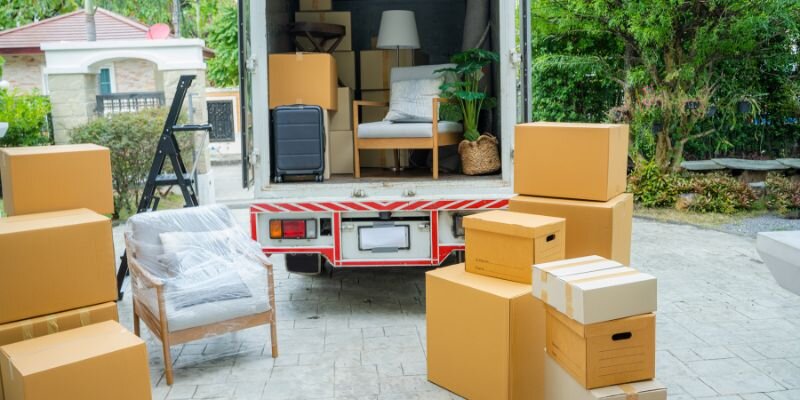
Selling and relocating at the same time is among the most stressful and demanding decisions a homeowner can make. Just the timing alone makes people think that it costs them sleep. One misstep and you may end up with two mortgages, managing a house hundreds of miles away, or taking a low offer to end the process. At Sell My House Fast For Cash, we have walked countless homeowners through every step of the way, such as when the right time to sell is and how to manage remote closings on the sale, helping you make confident decisions and leave some of the most expensive and frequent mistakes behind, so you can arrive at your new destination without the financial consequences most out-of-state sellers are inexperienced with.
Should You Sell Your Home Before or After Moving Out of State

Selling your house before you move simplifies your finances, but moving first gives you the flexibility to settle into your new job and find schools for your children without worrying about your house selling. The average time for properties to reach a contract is 28 days, and the median sale price across the nation is approximately $422,400. Those numbers, however, are only achieved when you have a showing-ready house and have priced appropriately. The other downside to moving first is that you pay for two houses, and your new mortgage may be affected by your debt-to-income ratio. The majority of lenders require a DTI of 43% or lower. It is easy to exceed that threshold if you have two mortgages.
If your house is listed, but you are trying to pressure yourself into a new home, you can get a pre-approval for your new mortgage to avoid more time in limbo. Bridge loans are also an option, and they allow you to purchase a new home using your current home’s equity. The cost is that they typically have higher interest rates and a more difficult approval process. Realistic pricing is key for both. While you are still paying for housing, other people are living in your house for free. Weigh your risk, including your cash reserves, because even the best plans can be affected by the unexpected.
Quick Comparison: Selling Before vs After Moving Out of State
Every seller must make this choice, and an incorrect one can result in significant loss. Prior to delving into the details, this table summarizes the most important elements to help you select the best strategy for your situation.
| Factor | Sell Before Moving | Sell After Moving |
| Financial Risk | Lower | Higher |
| Flexibility | Limited | Greater |
| Carrying Costs | Minimal | Two mortgages possible |
| Staging Advantage | Yes, still occupied | No, vacant home |
| Negotiating Position | Stronger | Weaker |
| Debt to Income Ratio | Easier to qualify | Harder to qualify |
| Timeline Pressure | Moderate | High |
| Buyer Perception | Normal | Motivated seller assumed |
There is no universal rule that makes one option superior to the other. Ultimately, your financial cushion, the start date of your job, and your individual risk tolerance should influence your decision more than your personal rules of thumb.
Why Selling Your House From Out of State Creates Unique Challenges
Remote selling has its challenges. When a buyer’s agent calls to request a showing, you cannot prepare the property in person. Some maintenance problems will cause a showing to be canceled. Storm damage can be a liability as it goes unrepaired for weeks. The vacant property can lead to buyer apprehension due to a lack of maintenance. The more you have to depend on others to keep you updated, the more your communication will break down. Your real estate agent will have other clients and will not be able to be your eyes and ears to the property. You can take too long to respond to a request to make a repair and lose a buyer because of the time zone difference.
It is common for buyers to make lowball offers for a vacant home. They assume that, because you have to pay for the care of the vacant home, any offer is better than nothing. Selling a vacant home can be a 6-10% loss compared with selling an occupied home. Neglecting a home has other costs as well, from pests and the elements. From overflowing gutters to the deterioration of your landscape and HVAC cycling through vacant rooms, damage will quickly add up. On top of that, there are other time-sensitive issues, such as tax and association notices, that will worsen and you cannot address.
What Are Your Best Options for Selling Property You No Longer Live In
The national average for a house now is $400,000, but what you end up selling for depends on a number of factors. The most common choice is a traditional sale. A real estate agent does their best to professionally advertise the property and gives access to the MLS. Rent-to-own lets you and the tenant relocate, while the property continues to generate income. Tenants may not buy the property, and they are difficult to manage from a distance. For Sale By Owner is the most common alternative, and also the most work. You don’t have to split the profits with an agent, but you have to market, show, and negotiate the sale.FSBO accounts for only 8 percent of all home sales nationally, and remote sellers attempting it without local support face even lower success rates.
The sale is guaranteed on a definite date, but auctions are still expected to end below market value. For more protection on pricing, a reserve auction can be set, but those come with the risk of buyers not bidding, and ending with actually low pricing. The development of online auctions is great for the seller, but the advertising and prep work still must be done locally. You can expect different levels of stress, cost, and time for each selling method. You choose what fits best for your finances and supervision of the property. A practical middle ground is starting with a traditional listing and switching to a direct cash buyer if the property does not sell within a predetermined timeframe.
How to Find the Right Real Estate Agent When You Live in Another State
Evaluate numerous agents with video calls, concentrating on their work with remote sellers. Inquire about their methods for handling showings, maintenance concerns, and price changes without an in-person presence. Find out how and when they communicate and their contact and time-zone preferences. Ask for references of recent clients who sold remotely, as those clients had your situation and will tell you if the agents were responsive and dealt with issues. Remote selling requires more from an agent, as real estate commissions are 5 to 6 percent of the sale price. Expect agents to deliver value in the form of scheduled updates with solution-oriented thinking and problem prevention through active engagement with the market.
Use agents with relocation and investor clients as a focus, as they will have developed their own systems to work with clients who transact remotely and who are not in the local area. When you cannot be there, the virtual aspects of a sale become the focus. Use agents who are skilled photographers, provide virtual tours, and have a digital presence. These tools and resources become your primary means of seeing the status of your home before potential buyers. Use agents who provide thorough showing feedback, are active on social media, and use CRM systems to monitor buyer activity. You deserve the right agent to make the remote sale a process and not an event.
How to Price and Market Your Former Home From Your New Location

Remote sellers struggle to determine home pricing because they don’t see competing homes. Your agent’s comparative market analysis is very important, and you should research similar sales to verify the analysis. Sales data can be found in public home listings and local MLS information. It is critical to price the home accurately from the start. Overpricing and later reducing the price leads to negative perceptions. To avoid this, consider pricing the home slightly below market value. This strategy can lead to multiple offers and create a bidding war. Your agent will be unable to stage your home, so professional photography will be essential to sell your home. Each photo will cost $300 to $800 if taken professionally. Twilight and aerial shots should also be considered.
If staging the home is a challenge, virtual home tours and videos are an effective marketing strategy. Some buyers will not make an in-person offer without a home tour. This is especially true for buyers who are relocating for work. Heavy virtual marketing will help distant buyers as it widens the market. Interactive marketing can assist potential buyers in understanding the flow of your home, space, and relationships between rooms. You should list the home during the selling season for your market, and you want to time your home listing so that there is not an excess of competition. The spring and early summer months will generally have the most buyers, but can vary by market. For sellers who want to bypass the marketing process altogether, a company that buys homes in Minnesota or surrounding cities can make a direct cash offer without the need for virtual tours, staging, or seasonal timing.
Your Pre-Move Checklist Before Listing Your Home From Another Location
Most remote selling mistakes occur before a home is officially listed. This checklist serves as a proactive measure during your local absence to save time and reduce costs that impact the final sale price.
- Select a local real estate agent with experience selling properties remotely
- Schedule automatic bill payments and mail forwarding
- Establish a budget of $150 to $400 for home maintenance and upkeep
- Select a trusted local contact who will check on the home
- Purchase professional photos and schedule virtual tours of the home
- Obtain pre-approval for the mortgage of a new home while the current home is for sale
- Schedule communication with your agent for every week
- Set an initial selling price that will avoid negative perceptions in the market
- Consider a bridge loan to cover the potential gap from home purchase to home sale
- Prepare emotionally and financially for an extended home sale process
By being proactive and completing this checklist during your absence, you will retain far more control than trying to solve problems from a distance. Preparation is the only real advantage a remote seller has, and completing this checklist before you leave gives you far more control than trying to solve problems from a distance.
Steps to Successfully Sell Your Home While Living Across the Country
Before you list your house for sale, you should build a support network. Look to your trusted, available neighbors. Seeking help and support from family and friends to check up on your house and spot things like broken sprinklers or damaged roof tiles/storm damage is helpful. In the unfortunate case that you do not have support, consider a property management company. Expect a range of $150 to $400 for the monthly care that takes the size and needs of your property into account. Cared-for houses sell faster. Trust the support company you choose to manage your property. Erratic mail and utility management can lead to unattended, ill-cared-for houses. Nothing is worse for a showing than arriving at an unattended house and finding utility shutoffs.
Get a good plan in place to manage your property with your support of choice. Request that they provide you with a quick status report each week. Take a look at pictures for property updates and approve needed care to avoid cancellations of showings. You should authorize your support of choice to take care of minor issues. You should prepare to replace your property management with an on-site support vendor to meet the demands of an active sales market. You will need to answer offers as they come in. You should stay flexible and focused on the current sales demands rather than lingering concerns about your former home.
What Surprises Most Home Sellers During Long-Distance Property Sales
Photographs of vacant homes reveal how easily furnished homes can make them seem larger and more welcoming to sellers. Vacant homes incur utility costs and have an added monthly expense between $200 to $400 for heating, cooling, and basic electrical service. Insurance companies charge higher premiums for vacant homes. Buyer assumptions, left to reason, lead to lower offers, as they think that a vacant home situation means a more motivated seller. Meanwhile, market conditions can change while you try to settle into that new routine. Shifts in new construction, the local economy, and mortgage rates can alter buyer demand in the area you have just left.
Vacancy makes small maintenance problems much worse. Without daily observations, slowly running toilets, drips from a faucet, and HVAC repairs can become impediments to a home showing. Occupied homes sustain less weather damage. Vacant homes become worse storm damage, and frozen pipes and pest invasions go undetected for weeks. The biggest challenge shifts to communication. Delayed responses are the fastest way to lose buyers, so improve your process. The time a seller would take to show a home now stretches to days of back and forth. Repairs and showings wait while the sellers struggle with the phone to negotiate with buyers. For those who want to skip these challenges entirely, cash home buyers in Washington or surrounding cities can purchase your vacant property as is, eliminating the need for repairs, showings, and lengthy negotiations.
Why Your Out-of-State Home Isn’t Selling in Today’s Market

With buyer expectations for homes to be move-in ready, many sellers are at an advantage, as many problems can be fixed quickly. Distant sellers face difficulties when buyers, worried that the selling process will be delayed, will use the time waiting for repairs to be done as justification for canceling the sale. Sellers also face difficulties with suboptimal offers due to a reluctance to adjust the sales price without witnessing the market firsthand. The median-priced homes in the U.S. lose at least $27,400 to $39,500 due to stagnant sales prices, as homes that are not selling cost the sellers more in carrying costs. Staging sells homes more quickly, and the cost of staging is less than the cost incurred due to stagnant sales, yet many remote sellers are leasing empty homes to avoid costs.
In the fast-moving local markets, the absence of new listings, changed prices, and interest rate moves can quickly make a home listing unattractive. Buyers may also assume hidden problems exist with remote sales, which is a detriment to negotiations, and carrying costs may make repair value override the home sale value. To limit losses, direct home sales may be a more attractive option, as the sale price will be less than attempting to list the home traditionally to achieve the maximum value.
FAQs
Can I Sell My House While Living in a Different State?
You can sell your house from a different state, as long as you have a trusted agent who can manage upkeep on the house and can deal with a fair amount of inconveniences. It is done every year.
What Is the 3 3 3 Rule in Real Estate?
The 3 3 3 rule suggests buying a home priced at no more than three times your annual salary, putting at least 3 percent down, and keeping monthly housing costs at no more than one-third of your monthly gross income.
What Devalues a House the Most?
The major factors when considering a property’s depreciation are its structural state and the age of utilities and systems, especially plumbing and electrical. Negatively impacting the neighborhood is a quick way to lower the worth of your property. However, the surrounding neighborhood state is a larger concern than defects in a property’s appearance.
Can I Afford a $400k House on a $100k Salary?
When considering traditional lending practices, a $400,000 home would be difficult to afford on a $100,000 yearly income, given the down payment, debt, and credit requirements to even consider buying the home. With traditional lenders, housing payments would have to be under 28% of the monthly gross income.
Selling your home and relocating out of state does not have to be overwhelming. Whether you are working against a tight moving deadline or managing a property from a distance, Sell My House Fast For Cash makes the process simple. We provide fair cash offers, handle every detail, and move on your timeline so you can focus on your new home without looking back. No repairs, no showings, no surprises. Contact us at (866) 824-3222 for a no-obligation conversation. Getting started costs you nothing.
Helpful Washington Blog Articles
- How to Sell a Condemned House in Washington
- Average Cost to Sell a House in Washington
- How to Sell a Fire-Damaged House in Washington
- Do Open Houses Still Work For Selling Homes In Washington
- How To Sell Your House Without A Realtor In Washington
- Sell Your House and Move Out of State
- Can Medical Debt Force You To Lose Your Home In Washington
- Sell House With Water Damage in Washington
- Selling a House That Needs Repairs in Washington
- What Washington Homeowners Actually Lose When Selling a House As-Is
- Can You Sell a House With Termites in Washington